


Best Knee Joint Preservation In Nagpur

- MBBS
- MS (Ortho)
- SICOT International Fellow (IRCCS Polyclinico San Mateo, Italy)
- Academic Visitor (Hospital for Special Surgery , New York)
- Revision Joint Replacement Fellow (Helio Endo Klinic, Germany
Experience : 10 Years
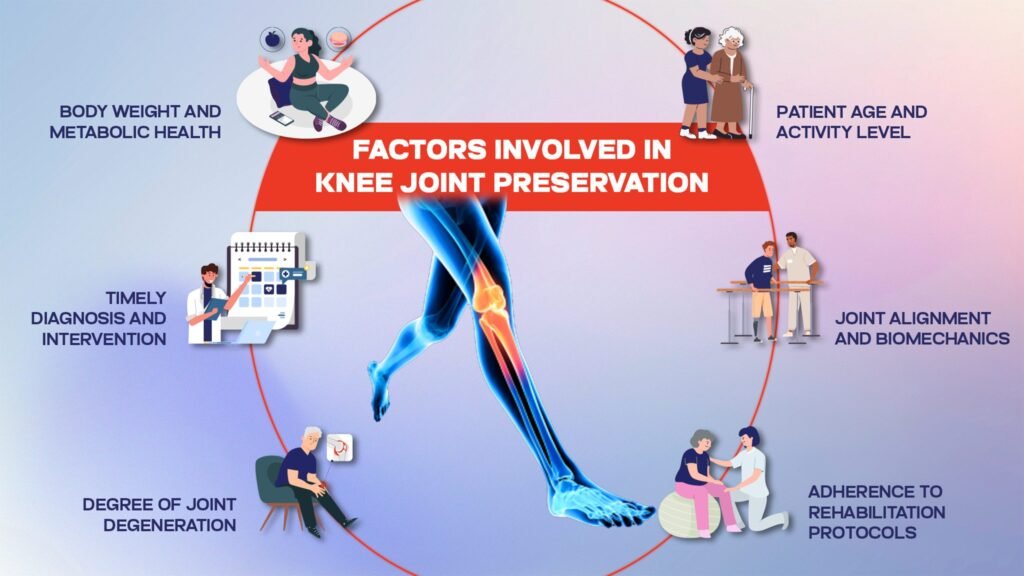
Best Knee Joint Preservation In Nagpur – Knee pain can gradually limit your ability to walk, climb stairs, exercise, and perform daily activities. Many people believe knee replacement is the only solution. However, this is not always true. Modern orthopedic care focuses on preserving the natural knee joint whenever possible. Therefore, early diagnosis and timely treatment can reduce pain. They also improve mobility and slow joint damage. Knee joint preservation uses advanced techniques and personalized treatment plans. As a result, patients can maintain better knee health and delay the need for knee replacement surgery.
At Medicure Multispecialty Clinic, Dr. Romil Rathi provides comprehensive evaluation and advanced Best Knee Joint Preservation in Nagpur. He treats patients with early knee arthritis, cartilage injuries, ligament damage, meniscus tears, and persistent knee pain.
Understanding Knee Joint Preservation By Dr.Romil Rathi
Why Early Knee Preservation Matters ?
Many people ignore knee pain until it becomes severe. However, delaying treatment allows cartilage damage to progress over time. As the cartilage wears away, the knee joint becomes rough and painful. This damage can also cause stiffness, swelling, and reduced mobility. Therefore, an early orthopedic evaluation offers the best opportunity to preserve the natural knee joint and prevent further deterioration.
Early treatment helps maintain muscle strength, joint stability, and flexibility. It also improves recovery and supports better long-term results. Instead of waiting until knee replacement becomes necessary, knee preservation techniques slow joint damage and improve daily comfort. At Medicure Multispecialty Clinic, Dr. Romil Rathi recommends timely diagnosis and personalized treatment to protect the natural knee. This proactive approach allows patients to benefit from conservative and minimally invasive treatments whenever appropriate.
Common Conditions Treated with Knee Joint Preservation
Knee Joint Preservation addresses several orthopedic conditions before irreversible joint damage develops. Early osteoarthritis remains one of the most common reasons patients seek preservation treatment. However, many other knee disorders can also benefit from timely orthopedic care. Cartilage injuries frequently affect younger individuals and athletes after sports-related trauma. Meniscus tears may develop because of sudden twisting injuries or gradual degeneration with age. Ligament injuries, including ACL and PCL damage, often create knee instability that increases the risk of future cartilage wear. In addition, abnormal leg alignment, such as bow legs or knock knees, places uneven pressure on the knee joint and accelerates arthritis progression. Dr. Romil Rathi carefully identifies the underlying cause of pain before creating a personalized treatment plan that protects the patient’s natural knee and promotes long-term mobility.
Who Is the Right Candidate for Best Knee Joint Preservation in Nagpur?
At Medicure Multispeciality Clinic, Dr. Romil Rathi performs a thorough evaluation to identify the underlying problem and recommend the most suitable treatment for long-term joint health.
Patients who may benefit from Best Knee Joint Preservation in Nagpur include:
• Patients with early knee osteoarthritis
• Individuals with cartilage damage
• Patients with meniscus tears
• People with ACL or PCL injuries
• Patients with knee instability
• Individuals with bow legs (Varus deformity)
• Patients with knock knees (Valgus deformity)
• Athletes with sports-related knee injuries
• People with recurrent knee swelling
• Patients with persistent knee pain
• Active adults who want to delay knee replacement
After the evaluation, Dr. Romil Rathi creates a personalized treatment plan based on the patient’s condition and lifestyle. Depending on the diagnosis, treatment may include physiotherapy, regenerative therapies, arthroscopy, or corrective procedures.
Benefits of Best Knee Joint Preservation in Nagpur
Early treatment helps reduce pain, improve mobility, and protect healthy cartilage from further damage. At Medicure Multispecialty Clinic, Dr. Romil Rathi focuses on treatments that restore knee function while helping patients maintain an active and independent lifestyle.
The benefits of Best Knee Joint Preservation in Nagpur include:
• Preserves the natural knee joint
• Delays or avoids knee replacement surgery
• Reduces knee pain and inflammation
• Improves walking and daily activities
• Maintains joint flexibility and stability
• Protects healthy cartilage
• Supports faster recovery after treatment
• Improves overall knee function
• Encourages an active lifestyle
• Enhances long-term joint health
• Provides personalized treatment options
Every patient responds differently to treatment. Therefore, Dr. Romil Rathi develops an individualized plan after assessing the condition of the knee joint.
How Is Knee Joint Preservation Diagnosed?
Accurate diagnosis forms the foundation of successful knee joint preservation. Therefore, Dr. Romil Rathi performs a comprehensive evaluation before recommending any treatment. The assessment identifies the exact cause of knee pain, measures the extent of cartilage damage, and determines whether the natural knee can be preserved. This detailed approach helps patients receive the most effective treatment at the right stage.
The diagnostic evaluation may include:
• Detailed medical history
• Physical examination of the knee
• Range of motion assessment
• Ligament stability tests
• Walking and gait analysis
• Digital X-rays
• MRI scan, when required
• Cartilage assessment
• Evaluation of knee alignment
• Review of previous treatments and reports
After completing the evaluation, Dr. Romil Rathi explains the findings in simple language and discusses the available treatment options.
Treatment Options for Best Knee Joint Preservation in Nagpur
Every knee condition requires a personalized treatment plan because the severity of joint damage varies from one patient to another. Therefore, Dr. Romil Rathi recommends the most appropriate preservation technique after completing a detailed orthopedic evaluation. The primary goal is to relieve pain, improve knee function, and protect the natural joint. Early treatment also helps slow cartilage wear and supports long-term mobility without immediate knee replacement.
Treatment options may include:
• Activity modification
• Weight management guidance
• Physiotherapy and muscle strengthening
• Pain-relieving medications
• Knee braces and supportive devices
• PRP (Platelet-Rich Plasma) therapy
• Hyaluronic acid injections
• Arthroscopic knee surgery
• Cartilage restoration procedures
• High Tibial Osteotomy (HTO), when indicated
• Personalized rehabilitation programs
Dr. Romil Rathi selects each treatment based on the patient’s age, lifestyle, activity level, and the extent of knee damage. Moreover, regular follow-up helps monitor recovery and adjust the treatment plan whenever necessary.
Why Choose Dr. Romil Rathi for Best Knee Joint Preservation in Nagpur?
Choosing an experienced orthopedic surgeon plays an important role in preserving the natural knee joint. Therefore, patients should seek expert care before arthritis or cartilage damage becomes severe. At Medicure Multispecialty Clinic, Dr. Romil Rathi combines clinical expertise with modern orthopedic techniques to create personalized treatment plans that focus on long-term joint health and improved mobility.
Reasons to choose Dr. Romil Rathi include:
• Comprehensive orthopedic evaluation
• Personalized treatment planning
• Focus on preserving the natural knee joint
• Expertise in minimally invasive procedures
• Advanced diagnostic facilities
• Evidence-based treatment approach
• Patient-centered orthopedic care
• Individual rehabilitation guidance
• Clear explanation of treatment options
• Continuous follow-up during recovery
• Commitment to long-term joint health
Every patient receives individualized attention throughout the treatment journey. Dr. Romil Rathi carefully monitors recovery and modifies the treatment plan whenever required.
Lifestyle Changes That Support Best Knee Joint Preservation in Nagpur
Medical treatment plays an important role in preserving the knee joint. However, healthy lifestyle habits also improve treatment outcomes and protect the joint from further damage. Small daily changes reduce stress on the knee, strengthen supporting muscles, and improve overall mobility. Therefore, patients who follow their orthopedic specialist’s advice often experience better long-term results. At Medicure Multispeciality Clinic, Dr. Romil Rathi guides every patient on practical lifestyle modifications that complement medical treatment and support healthy knee function.
Simple lifestyle changes include:
• Maintain a healthy body weight
• Perform regular low-impact exercises
• Strengthen the thigh and leg muscles
• Follow a balanced and nutritious diet
• Wear supportive and comfortable footwear
• Avoid prolonged standing when possible
• Practice proper posture during daily activities
• Warm up before physical exercise
• Avoid sudden twisting movements of the knee
• Stay physically active within recommended limits
• Attend regular follow-up appointments
Following these recommendations helps reduce pressure on the knee joint and supports long-term recovery.
When Should You Consult a Knee Joint Preservation Specialist?
Ignoring persistent knee pain can allow joint damage to progress over time. Therefore, seeking orthopedic care at the right stage increases the chances of preserving the natural knee. Early consultation also helps identify the exact cause of pain before severe cartilage loss develops. At Medicure Multispeciality Clinic, Dr. Romil Rathi performs a detailed evaluation and recommends timely treatment based on the patient’s condition and activity level.
You should consult an orthopedic specialist if you experience:
• Persistent knee pain for several weeks
• Swelling around the knee joint
• Difficulty walking or climbing stairs
• Knee stiffness after resting
• Frequent clicking or locking of the knee
• Knee instability during movement
• Pain after sports or physical activity
• Reduced range of motion
• Difficulty standing for long periods
• Recurring knee injuries
• Pain that does not improve with rest
Early orthopedic evaluation helps identify the underlying problem before it becomes more serious.
Recovery After Knee Joint Preservation Treatment
Recovery depends on the type of treatment and the severity of the knee condition. However, most patients notice gradual improvement when they follow the recommended rehabilitation program. Therefore, regular exercise, physiotherapy, and follow-up appointments remain essential throughout recovery. At Medicure Multispeciality Clinic, Dr. Romil Rathi closely monitors progress and modifies the rehabilitation plan whenever necessary to achieve the best possible outcome.
Recovery usually includes:
• Personalized physiotherapy sessions
• Progressive strengthening exercises
• Flexibility and balance training
• Pain management strategies
• Gradual return to daily activities
• Walking with proper support if required
• Regular orthopedic follow-up
• Activity modification during healing
• Home exercise guidance
• Monitoring of joint function
• Long-term knee care advice
A structured rehabilitation program improves muscle strength, restores joint movement, and supports faster recovery.
Conclusion
Protecting your natural knee should always remain the first priority whenever possible. Best Knee Joint Preservation in Nagpur offers effective solutions for patients with early arthritis, cartilage injuries, ligament damage, and other knee conditions before joint replacement becomes necessary. Therefore, timely diagnosis and personalized treatment can reduce pain, restore mobility, and slow the progression of joint damage. At Medicure Multispecialty Clinic, Dr. Romil Rathi combines advanced orthopedic expertise with patient-centered care to develop treatment plans that preserve knee function and improve long-term joint health. Early intervention not only enhances recovery but also helps patients maintain an active and independent lifestyle for years to come.
Frequently Asked Questions
Book Your Consultation
If persistent knee pain is affecting your daily life, do not wait for the condition to worsen. Early orthopedic evaluation can identify the underlying problem and create opportunities to preserve your natural knee joint. At Medicure Multispecialty Clinic, Dr. Romil Rathi provides comprehensive assessment and personalized treatment for a wide range of knee conditions. Every treatment plan focuses on relieving pain, improving mobility, and delaying or avoiding knee replacement whenever possible. Schedule your consultation today and take the first step toward stronger knees, better movement, and long-term joint health.
Follow Us For More
Best Knee Joint Preservation
Joint preservation of the knee is an innovative thanks to facilitate relieve joint issues as naturally as doable. There ar several joint preservation procedures accessible to treat common joint issues like hip abnormal condition and early degenerative joint disease, while not requiring full replacement. the proper treatment and surgery to preserve your hip and knee joints is predicated on variety of vital factors, together with your age, gift health, health history, the extent and placement of the injury and your history with alternative medications and coverings.
Anatomy of the Knee
The knee could be a vulnerable joint that bears an excellent deal of stress from everyday activities, like lifting and kneel, and from high-impact activities, like cardiopulmonary exercise and aerobic exercise.
The knee is created by the subsequent parts:
Tibia. this can be the shin bone or larger bone of the lower leg.
Femur. this can be the leg bone or higher long bone.
Patella. this can be the kneecap.
Each bone finish is roofed with a layer of animal tissue that absorbs shock and protects the knee. Basically, the knee is two long leg bones control along by muscles, ligaments, and tendons. There are two teams of muscles concerned within the knee, together with the quadriceps femoris muscles (located on the front of the thighs), that straighten the legs, and therefore the hamstring muscles (located on the rear of the thighs), that bend the leg at the knee.
Tendons ar robust cords of tissue that connect muscles to bones. Ligaments ar elastic bands of tissue that connect bone to bone. Some ligaments on the knee offer stability and protection of the joints, whereas alternative ligaments limit forward and backward movement of the leg bone (shin bone).
Knee joint distraction (arthrolysis)
This innovative procedure will delay the necessity for a knee replacement operation and helps minimise the other inflammatory disease within the joint. Joint distraction uses the body’s natural healing processes to repair broken gristle within the joint. throughout minimally invasive joint preservation surgery, the bones square measure gently force apart to make area Associate in Nursingd square measure mounted victimisation pins and an external frame.
Diagnosis
If you’re having any joint pain in your hip or your knee, it’s vital to hunt medical attention. To diagnose your condition, your doctor can raise you a series of questions on your past and current health and perform a physical communicating. To best confirm the reason for your joint pain and notice the proper treatment, one amongst the subsequent techniques are used:
X-ray (radiograph)—This is often the primary technique utilized in any joint injury. It involves causation radiation through the affected space of the body. The bone then absorbs the radiation and provides doctors with a black and white image which will show any breaks or fractures. this can be perpetually done 1st to work out the health of the bones within the joint.
Computed tomography scan (CT or picture)—A CAT scan combines X-ray technology with technology to come up with a three-dimensional image of the bone and tissues within the space. this will provides a higher image of the matter.
Magnetic resonance imaging (MRI)—This imaging procedure puts you during a vessel. Here, magnetic waves ar moved around you, making vibrations. The resonance from these vibrations is then become a picture, that permits the doctor to envision skeletal structures in addition as blood vessels and tissues.
Arthroscopy—This procedure permits the doctor to form alittle incision and place a camera within the realm of the injury to induce additional detail. this can be sometimes exhausted conjunction with surgery, because it needs anaesthesia.